
Neuropsychological assessment in intellectual disability: diagnosis, challenges and tools

Strengthen your knowledge of neuropsychological assessment, psychometrics and diagnosis through standardised tests, practical cases and tools you can apply in clinical practice.

Assessing intellectual disability requires integrating diagnostic criteria, neuropsychological knowledge and a well-judged interpretation of each case.

This course explores the clinical characteristics and aetiology of intellectual disability, as well as the main diagnostic criteria and neuropsychological assessment methods used with children, adolescents and adults with disabilities.

The course also addresses the challenges that can arise during the assessment and intervention process, with the aim of strengthening clinical judgement and enabling an assessment better tailored to each person.

From assessment to clinical interpretation

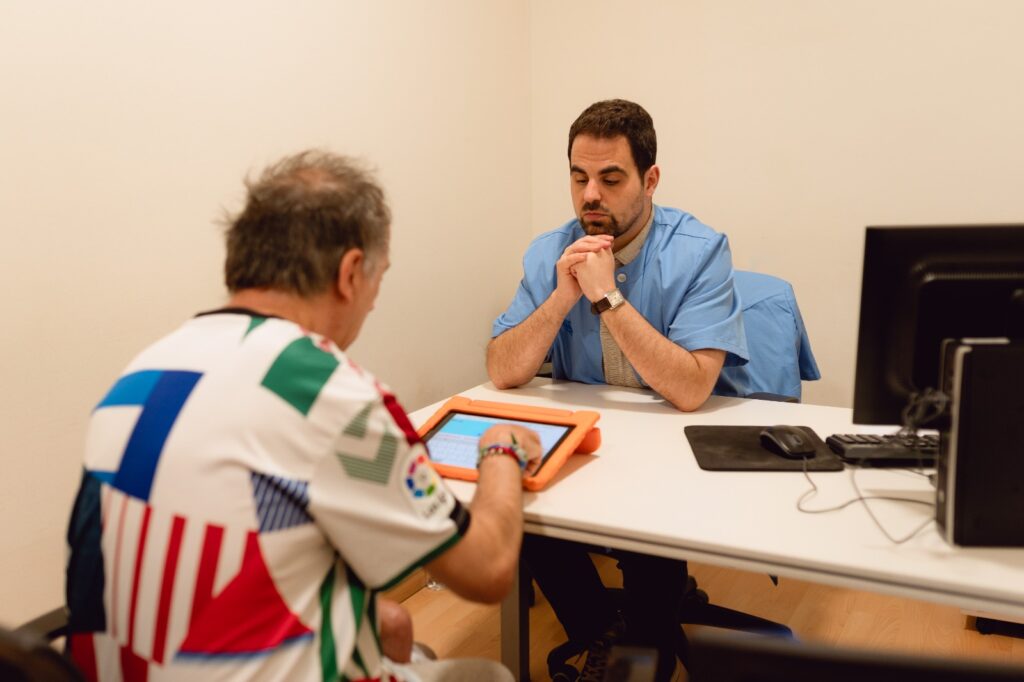
The course includes a practical workshop where participants can learn about different assessment tests, review how they are administered and work on interpreting practical cases.

A proposal that combines specialised knowledge and practical application to deepen understanding of the neuropsychological assessment and diagnosis of intellectual disability.
7 hours20 and 21/11/2026Barcelona (in person)15 places

Learning outcomes

  • Explore the concept of intellectual disability, its aetiology and diagnostic criteria in depth.
  • Learn about the neuropsychological assessment tools most widely used with people with disabilities.
  • Interpret psychometric test results and make diagnostic decisions using real cases.
  • Apply psychological intervention strategies and educational and social support.
  • Monitor the effectiveness of interventions and report it to the team and to families.

Course contents

1

What is intellectual disability

The concept according to diagnostic guidelines and diagnostic criteria. Genetic, biological and environmental causes, key characteristics and variability in presentation.

2

Neuropsychological assessment and the diagnostic process

Assessment goals in children and adults, assessment tools and psychometric tests, stages of the diagnostic process, interpretation of results and decision-making.

3

Intervention from a psychology perspective

Psychological intervention strategies and techniques, adapted educational programmes and social and community support strategies.

4

Case studies

Description and administration of neuropsychological tests and psychometric measures, analysis and interpretation of results and discussion of real cases.

5

Practical workshop

Simulated assessments, practice in administering tests and exercises to develop diagnostic skills.

6

Assessment and progress monitoring

Tools and methods for follow-up, evaluation of the impact of interventions on behaviour and quality of life, recording progress and regular communication with the multidisciplinary team and families.

7

Challenges and solutions

Common challenges in implementing treatment (resistance to change, lack of resources, technical problems) and strategies to overcome them: continuing professional development and teamwork.

8

Questions and answers

Clarifying doubts and discussing specific cases brought by participants.

Learning method

Hands-on with the tests

Participants learn first-hand how neuropsychological and psychometric tests are used and administered.

Role-play

Simulated assessments to build understanding, empathy and diagnostic skills.

Q&A space

A closing session to answer questions and discuss cases brought by participants.

Schedule and Calendar

Dates
20 and 21/11/2026
Schedule
Friday 20th, 4 pm to 7 pm · Saturday 21st, 10 am to 2 pm
Format
In person
Location
Carrer dels Tres Pins, 29, Sants-Montjuïc, 08038 Barcelona
Places
15 places
Certificate
Official certificate of the Fundació Aspace Catalunya

Who is it for

Psychology and neuropsychologyPsychiatry and medicineMental health professionalsTeams supporting people with intellectual disability

Teaching Team

Elba Egea Senabre

Elba Egea Senabre

Psychology · Outpatient Service

General Health Psychologist and neuropsychologist with the Mental Health Team of the Outpatient Service at Fundació Aspace Catalunya. She holds a degree in Psychology from the University of Valencia and a master's in Behavioural Neurology and Neuropsychology from the UAB, with a postgraduate qualification in Child and Adolescent Neuropsychiatry and Psychology (UAB) and training in ADOS-2 and ADI-R. She is accredited as an expert in Neuropsychology by the COPC and the Spanish General Council of Psychology. She has supervised neuropsychology placements for the UOC and ISEP master's programmes and worked for ten years at centres such as Institut Guttmann and SIRN supporting children, adolescents and adults with brain injury.

View CV

Oscar García García

Oscar García García

Psychology · Outpatient Service

Neuropsychologist with the Mental Health Team of the Outpatient Service at Fundació Aspace Catalunya since 2018. He holds a degree in Psychology and a master's in General Health Psychology from the University of Barcelona, a master's in Neuropsychology from the UOC and a postgraduate qualification in Child Neuropsychology and Behavioural Neurology from the UB. He was part of the UB's Advanced Statistical Techniques Applied to Psychology group and worked in the Neurodevelopment Unit at Clínica Corachan.

View CV

Inscriu-te a aquest curs

Fill in your details and continue to secure card payment. The course is already selected automatically.

Secure payment

When you send the form we will take you to Stripe's secure checkout to pay by card. Your card details never pass through our website.

Visa · Mastercard · American Express · Apple Pay · Google Pay

Questions about this course?

125€
per person
15 limited placesBook your place soon

The course includes:

  • Hands-on workshop with standardised tests
  • Analysis and interpretation of real cases
  • Learning materials
  • Official certificate from Fundació Aspace Catalunya
  • Limited places
Official certificate of the Fundació Aspace Catalunya
Share this course
WhatsAppLinkedInEmail