Safe and effective intervention in the aquatic environment

Gain practical tools to use water as a therapeutic and relational resource when working with children with complex neurodevelopmental disorders, cerebral palsy and multiple disabilities.

The aquatic environment can offer children new possibilities for movement, participation and wellbeing. But for the intervention to be truly meaningful, professionals need judgement, safety and tools to adapt it to each situation.

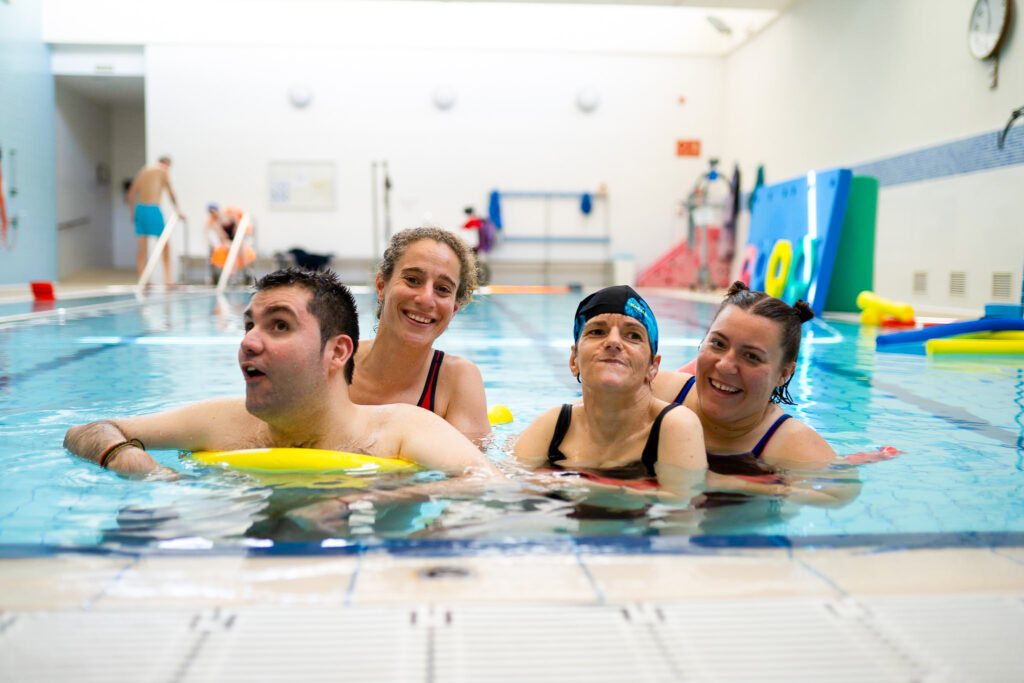
This theoretical and practical course, aimed at professionals in the health, social care and education sectors, explores the use of the aquatic environment as a setting for intervention with children with cerebral palsy and other complex neurological profiles.

Water offers specific conditions that can facilitate freedom of movement, reduce body load and encourage the child’s motivation and active participation. It also creates a playful, stimulating environment that can strengthen the bond with the professional and open up new opportunities for intervention.

From the pool to everyday life

The course focuses on how to plan and deliver meaningful aquatic interventions with clear goals and safety criteria, taking each child’s needs into account.

The course combines theoretical content with practical sessions in the therapeutic pool and work with real cases, to foster experiential learning that can be applied directly to professional practice.

The aim is for participants to gain resources to make the most of the aquatic environment and to ensure that what is learned in the water carries over and has an impact on the child’s daily life.

8 hours18 and 19/12/2026Barcelona (in person)12 places

Learning outcomes

  • Understand the basic principles of the aquatic environment and its benefits.
  • Identify the features of a safe aquatic environment.
  • Learn to design aquatic sessions for different profiles.
  • Apply appropriate handling techniques in the water (postural support, flotation, movement).
  • Develop and adapt playful and sensory activities to each profile and individual needs.

Course contents

1

Unit 1 · Theoretical introduction to the aquatic environment

Historical background, the properties of water, its benefits and effects on the human body, and dispelling common fears.

2

Unit 2 · Working in the water

Basic safety principles, strategies for entering and leaving the water, communication and setting boundaries, and aftercare following aquatic activity.

3

Unit 3 · Using the body and hands in one-to-one work

Principles of physical contact as support and guidance, handling techniques in the water and non-verbal communication strategies.

4

Unit 4 · Recreational activities for profiles with preserved motor skills

Specific adaptations, adapted games and exercises, and strategies for developing motor skills.

5

Unit 5 · Recreational activities for sensory profiles

A sensory approach in the water, passive mobility and relaxation, interaction and family bonding.

6

Unit 6 · Clinical cases

Presentation and analysis of clinical cases across different profiles.

7

Practice 1 · Exploration, adaptation and safety in the water

Gradual adaptation to the water, entry and exit strategies, breathing, passive flotation and gentle physical contact, exploration of materials, paired exercises and basic support positions.

2 hours (pool)
8

Practice 2 · Handling techniques and adapted activities with real cases

Applying the concepts with real families: assisted entry into the water, support positions and assisted flotation, individual and group play, relaxation exercises and leaving the water.

2 hours (pool)

Learning method

Transformative

Discover how intervention in the aquatic environment can transform the way you support children with cerebral palsy, building confidence and autonomy.

Practical and immersive

Learn by doing, with pool sessions that let you experience the techniques first-hand and apply them straight away.

Innovative

Explore the most current approaches in aquatic physiotherapy and relational intervention, combining science and therapeutic creativity.

Inclusive and person-centred

A learning experience that puts each child's needs at the centre, promoting inclusion and holistic development.

Inspiring and motivating

Reconnect with your professional vocation and discover new ways to unlock each child's potential, safely and confidently.

Schedule and Calendar

Dates
18 and 19/12/2026
Schedule
Friday 18th, 3 pm to 7 pm · Saturday 19th, 10 am to 2 pm
Format
In person
Location
Carrer dels Tres Pins, 29, Sants-Montjuïc, 08038 Barcelona
Places
12 places
Certificate
Official certificate of the Fundació Aspace Catalunya

Who is it for

PhysiotherapistsOccupational therapistsSpeech and language therapistsProfessionals in the health, social and educational fields

Teaching Team

Sergi Giraldos i López

Sergi Giraldos i López

Physiotherapy · Neurorehabilitation Service, Residence and School/Day Hospital

Graduate in Physiotherapy from the Universitat Autònoma de Barcelona and holder of a master's in Paediatric Physiotherapy from the Universitat Internacional de Catalunya, with experience in aquatic therapy. He has specific training in aquatic intervention in neurorehabilitation for children and adults and in therapeutic aquatic activity in early intervention, among other specialist courses linked to aquatic practice.

View CV

Inscriu-te a aquest curs

Fill in your details and continue to secure card payment. The course is already selected automatically.

Secure payment

When you send the form we will take you to Stripe's secure checkout to pay by card. Your card details never pass through our website.

Visa · Mastercard · American Express · Apple Pay · Google Pay

Questions about this course?

140€
per person
12 limited placesBook your place soon

The course includes:

  • Digital learning materials
  • Practical sessions in the Aspace pool
  • Work with real cases
  • Official certificate from Fundació Aspace Catalunya
  • Limited places (12)
Official certificate of the Fundació Aspace Catalunya
Share this course
WhatsAppLinkedInEmail