

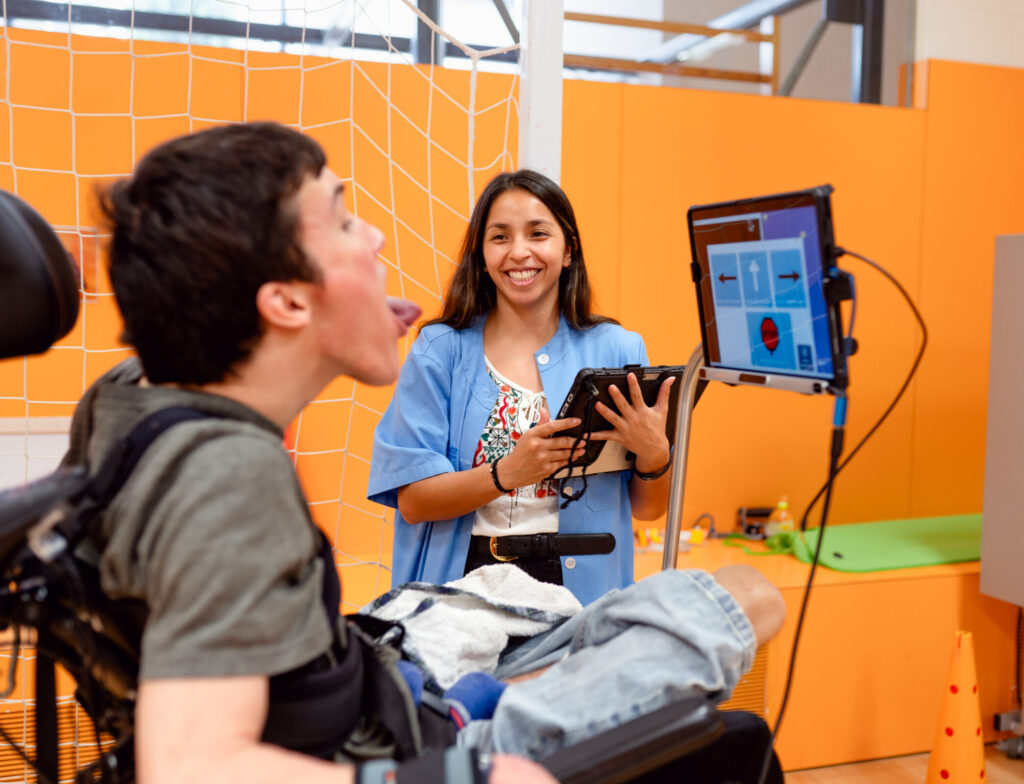
Technology that brings more control, autonomy and participation

Discover how voice assistants, home automation and environmental control can become useful tools for a more autonomous and participatory life.

This in-person course introduces participants to the possibilities offered by voice assistants, home automation and environmental control technologies in the daily lives of people with disabilities.

The course focuses on their practical application and on how these tools can reduce barriers, support decision-making and increase control over one’s own environment.

In practice, this can translate into everyday actions such as controlling devices at home, accessing information, organising activities or communicating with greater autonomy and safety.

From technology to everyday autonomy

The course will introduce different technological solutions and explain how to select and apply them in an accessible, person-centred way.

Beyond the technology itself, the course addresses its potential to strengthen autonomy, participation and quality of life, transforming home and community environments into spaces with more opportunities to take part.
4 hours20/02/2027Barcelona (in person)15 places

Learning outcomes

  • Understand the concept of environmental control and its impact on activities of daily living.
  • Learn about the main voice assistants, how they work and the technical requirements for setting them up.
  • Apply their basic features and create automated routines to simplify everyday tasks.
  • Integrate voice assistants into daily routines to foster autonomy and social participation.
  • Troubleshoot the most common problems and challenges in using these devices.

Course contents

1

What is environmental control

Introduction to the concept, its impact on activities of daily living, and an overview of the devices and technologies used to control the environment (home automation).

2

What are voice assistants

The concept and the main voice assistants, how voice recognition technology works, technical requirements and basic set-up.

3

Features and applications

Controlling lights, appliances, music, calendars and reminders; everyday uses and automated routines; improving quality of life and autonomy, with practical examples in home and care settings.

4

Use as a tool for independence and autonomy

Strategies for integrating voice assistants into daily routines and promoting social participation through accessible technology.

5

Case studies and examples

Analysis of real cases implementing voice assistants and home automation, examples of inclusion projects, assisted autonomy and troubleshooting common issues.

6

Challenges and solutions

Main obstacles (resistance to change, lack of resources, technical problems and accessibility limits) and strategies to overcome them: continuing professional development, effective communication, technical support and collaborative work.

Learning method

Device demonstrations

The main voice assistants are demonstrated, along with their basic set-up.

Routines and everyday uses

Building automated routines and examples of use in home and care settings.

Real cases

Analysis of real inclusion and assisted-autonomy projects using home automation and environmental control.

Troubleshooting

Common obstacles (technical, accessibility and resistance to change) and strategies to overcome them.

Schedule and Calendar

Dates
20/02/2027
Schedule
Saturday, 10 am to 2 pm
Format
In person
Location
Carrer dels Tres Pins, 29, Sants-Montjuïc, 08038 Barcelona
Places
15 places
Certificate
Official certificate of the Fundació Aspace Catalunya

Who is it for

Occupational therapistsProfessionals in the social and educational fieldsDirect support teamsAssistive technology professionals

Teaching Team

Rhoda Nieves Rovira

Rhoda Nieves Rovira

Occupational Therapy Lead · CTO Badalona, Fundació Aspace Catalunya

Occupational Therapist at Fundació Aspace Catalunya since 2007 and Lead of the Occupational Therapy Area since 2020. She holds a diploma in Occupational Therapy from the EUIT in Terrassa and works clinically in neurorehabilitation at the CTO Badalona of Fundació Aspace, where she is part of the Crea-3D team and the Driving Skills Assessment Unit. She specialises in functional assessment, assistive products, accessibility and the application of new technologies to promote the autonomy and participation of people with disabilities. An accredited AMPS assessor, she teaches and supervises Occupational Therapy students and students of the Master's in Neurorehabilitation at the University of Vic. She has taken part in several innovation projects related to environmental control, voice assistants and 3D printing, as well as in conferences and symposia.

View CV

Inscriu-te a aquest curs

Questions about this course?

75€
per person
15 limited placesBook your place soon

The course includes:

  • Hands-on device demonstrations
  • Analysis of real cases
  • Learning materials
  • Official certificate from Fundació Aspace Catalunya
  • Limited places
Official certificate of the Fundació Aspace Catalunya
Share this course
WhatsAppLinkedInEmail